Strait of Hormuz: marine war market offering cover for vessels in high-risk areas
Major issues affecting operators explained, alongside key steps to take
 Prefer us on Google


Key takeaways
- War cover available for vessels transiting high-risk areas, with quotes going out daily
- Marine, cargo operators affected by conflict should engage with an expert broker
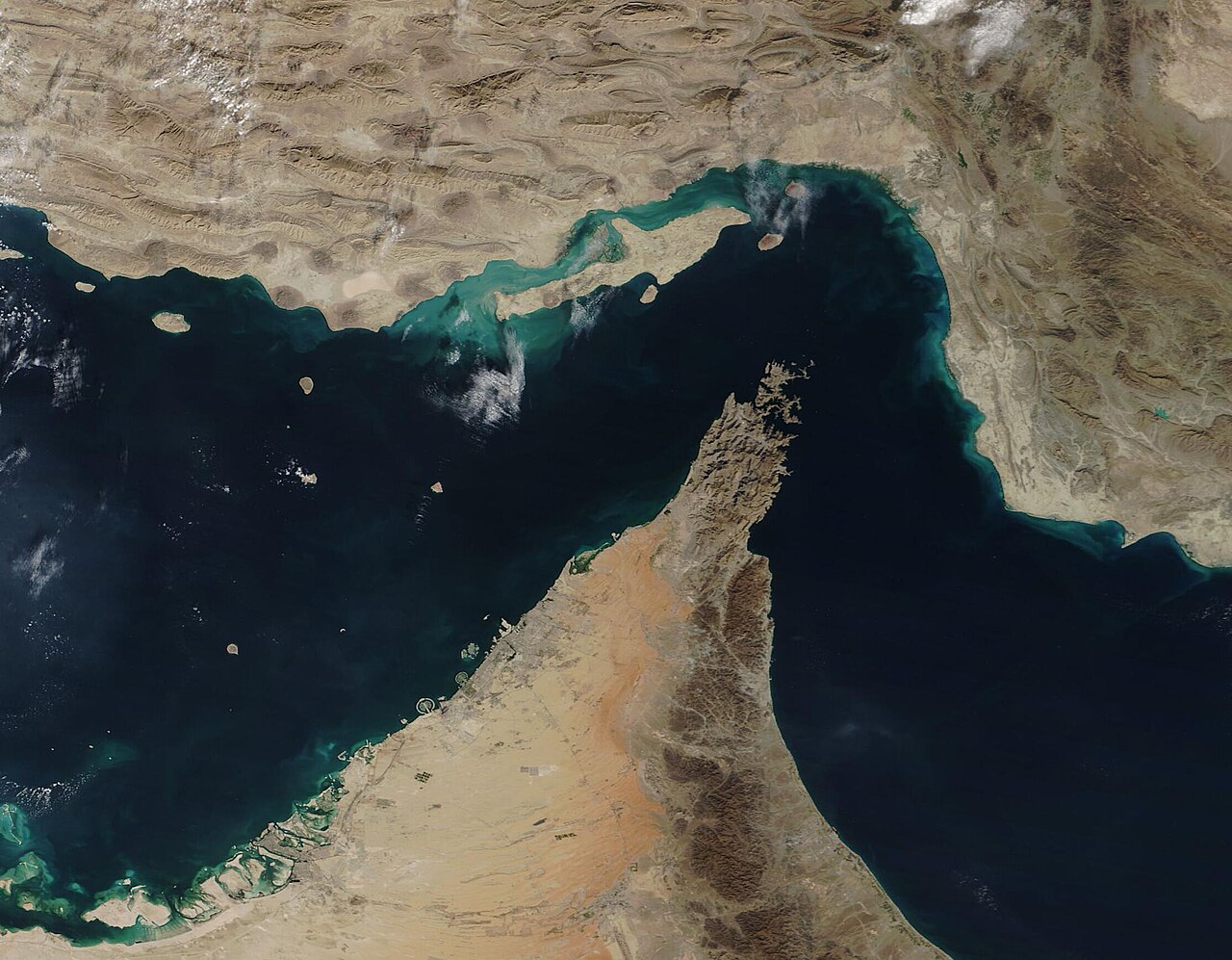
It’s one of the global economy’s major arteries. The shipping route takes one fifth of the world’s oil and gas from the Persian Gulf to the rest of the world.
Now, the Strait of Hormuz is effectively closed – with the vast majority of maritime traffic paralysed by the US-Israeli conflict with Iran.
Since the conflict began, 19 ships have been attacked, seafarers killed and ports and energy infrastructure hit across the Gulf. There are also reports of mine laying in the channel.
Unwilling to run the risk of going through the Strait, some 200 vessels sit in the Indian Ocean waiting to transit. While over 750 vessels are stranded in the Persian Gulf – including tankers laden with $15.3bn of oil and gas, according to figures accurate two-weeks into the war.

London market covering high-risk areas
It’s a complex and rapidly changing situation, but our message to marine and cargo operators is clear: the London market is open and ready to support shipping and trade through the conflict.
Underwriters are actively quoting for vessels transiting high-risk areas and offers are going out daily at revised terms.
“Insurance isn’t an inhibitor of shipping,” said Gill Martin, Divisional Director, Marine, Cargo & Logistics. “It is actually an enabler.”
“The London markets are currently quoting for vessels to transit the Strait of Hormuz,” she added.
What the conflict is changing is how that risk analysed and priced.
Repricing risk to enable trading
At the beginning of the conflict in late February, a common misconception was that insurers were unwilling to quote for vessels operating in high-risk areas.
London cargo insurers issued notices of cancellation (NOC) on war cover across hull, cargo and P&I pillars for key regions including the Persian Gulf, the Strait of Hormuz, Israeli waters and the Red Sea.
But contrary to what the name implies, NOCs are not designed to cancel policies – they are contractual mechanisms that enable revisions.
In rapidly changing risk conditions, they allow underwriters to simultaneously cancel and reinstate war risk cover on revised terms.
These clauses provide visibility of vessel movements, allow underwriters to monitor aggregates – which are contractual mechanisms in insurance policies that allow for multiple claims to be consolidated if a unifying factor is identified – and sanctions exposure, and alert shipowners to higher risk areas.
Typical notice periods are seven days (common for shipping) or 72/48 hours in some cases – such as one of the five powers going to war – giving owners time to alter voyages or seek revised terms.
It’s market practice that when a NOC is issued, coverage is automatically reinstated, often at revised terms. Prices are currently elevated, in context of the heightened threat matrix, but beginning to stabilise.
“We are not aware of any underwriter anywhere that has not reinstated cover, so all vessels continue to be covered,” Martin said.
Politically, there are also moves to support shipping.
US President Trump recently announced a US-focused plan to sell insurance for ships in the Gulf in an effort to get oil moving.
The US Development Finance Corp., which is part of the federal government, has been tasked with implementing a $20-billion (re)insurance programme led by American insurers.
“We welcome initiatives that support global shipping and trade continuity. There is a precedent for these initiatives such as the introduction of TRIA,” said Ellis Morley, Divisional Director, Marine, Cargo & Logistics.
TRIA, more formally known as the Terrorism Risk Insurance Act, was introduced in the wake of the September 11, 2001 terrorist attacks to ensure that US businesses would have access to affordable terrorism insurance.
War risk in other policies
Cargo policies work slightly differently.
Placements are often adjustable – and if a voyage is already underway within the notice period, cover typically continues with war premiums charged per voyage. Revised terms may be required if a voyage hasn’t yet started.
Mutual P&I cover is unaffected. Clubs continue to write war risk on an excess basis of either $500m of a vessel’s underlying policy or hull value, whichever is greater.
The only products impacted are fixed-term P&I entries – charterers’ liability, small vessel P&I and certain offshore units.
For these, policies have been re-written to exclude the Persian Gulf and adjacent coastal waters – and extensions to enter or exit the region are available.
What to do now
Check whether your P&I entry is mutual or fixed-premium. If it’s fixed-premium and you have vessels operating in or near the Gulf, contract your broker to establish whether you need an extension. If you’re unsure which category applies to you, your broker can confirm this quickly.
Contractual considerations for owners and charterers
The conflict is also creating significant contractual pressure for owners and charterers. Decisions to deviate, cancel or suspend performance – even when justified – carry serious legal and financial consequences if made on the wrong grounds or without proper documentation.
Most charter parties governed by English law contain a war risks clause – frequently the BIMCO CONWARTIME clause for time charters, or VOYWAR for voyage charters.
These give owners the right to refuse orders or demand alternative instructions if, in the master's or owner's reasonable judgement, the vessel may be or is likely to be exposed to war risks. That threshold is currently not difficult to meet for vessels in the Persian Gulf.
The position is less straightforward for vessels ordered to the region from a distance, or where the timing of arrival is weeks away. The immediacy of the threat matters to the legal analysis, and charter party terms can vary considerably.
Your policy: what to do now
Review your charter party war risks clause
before taking any steps to deviate, cancel or suspend performance. Do not act first and seek advice second – the consequences of getting this wrong can be severe.
If you believe you have grounds to refuse orders or alter a voyage,
document your reasoning thoroughly at the time – including the security advice, intelligence, and other factors informing the decision. This evidence will be essential in any subsequent dispute.
Use that contractual clarity
as the basis for a commercial conversation with your counterparty, where possible. Agreed solutions – suspensions, cancellations by consent – are being reached across the market and are far preferable to litigation.
Take advice
from your P&I club, your freight, demurrage and defence (FD&D) team, or your lawyers before acting.
Cyber risk and war cover
The conflict has also elevated marine cyber risk. Typical attacks include GPS spoofing, where a transmitter mimics genuine satellite signals to misdirect a vessel, and GPS jamming, where all satellite signals are blocked.
Both can cause accidents, disrupt infrastructure and leave vessels vulnerable to physical attack or cargo theft.
Determining which policy responds
When cyber attacks are used as a weapon of war, it can be unclear which policy provides cover. Generally, if an unauthorised cyber attack on the ship’s system causes the loss, the cyber policy responds. If the loss stems from a navigation error during conflict, it may be treated as a marine or war peril.
Dedicated cyber policies can remove this uncertainty. These are designed to respond to cyber incidents regardless of who carried out the attack or why, removing grey areas.

The outlook for operators and key steps
Even with enhanced insurance, and military support, ultimately the decision and motivation to operate in conflict zones lies with owners and masters. In this fast moving situation, clarity and expert guidance are essential. If you have vessels operating in or near the Gulf right now, the key steps are:
1. Check your charter party war risks clause
before taking any action to deviate, cancel or refuse orders.
2. Establish whether your P&I cover is mutual or fixed-premium
and if it's fixed-premium, contact your broker about extensions.
3. Document all operational decisions
with supporting evidence and reasoning at the time they are made.
4. If considering switching off AIS
speak to your broker first to confirm underwriter support.
5. Review cyber policy limits and incident-response plans
particularly for shoreside and port operations.
The bottom line
The marine and cargo insurance market remains open and responsive.
For any marine and cargo operator whose assets are vulnerable to war risks, we recommend engaging with expert brokers who can provide expertise, guidance and support needed to keep business operational in these challenging circumstances.